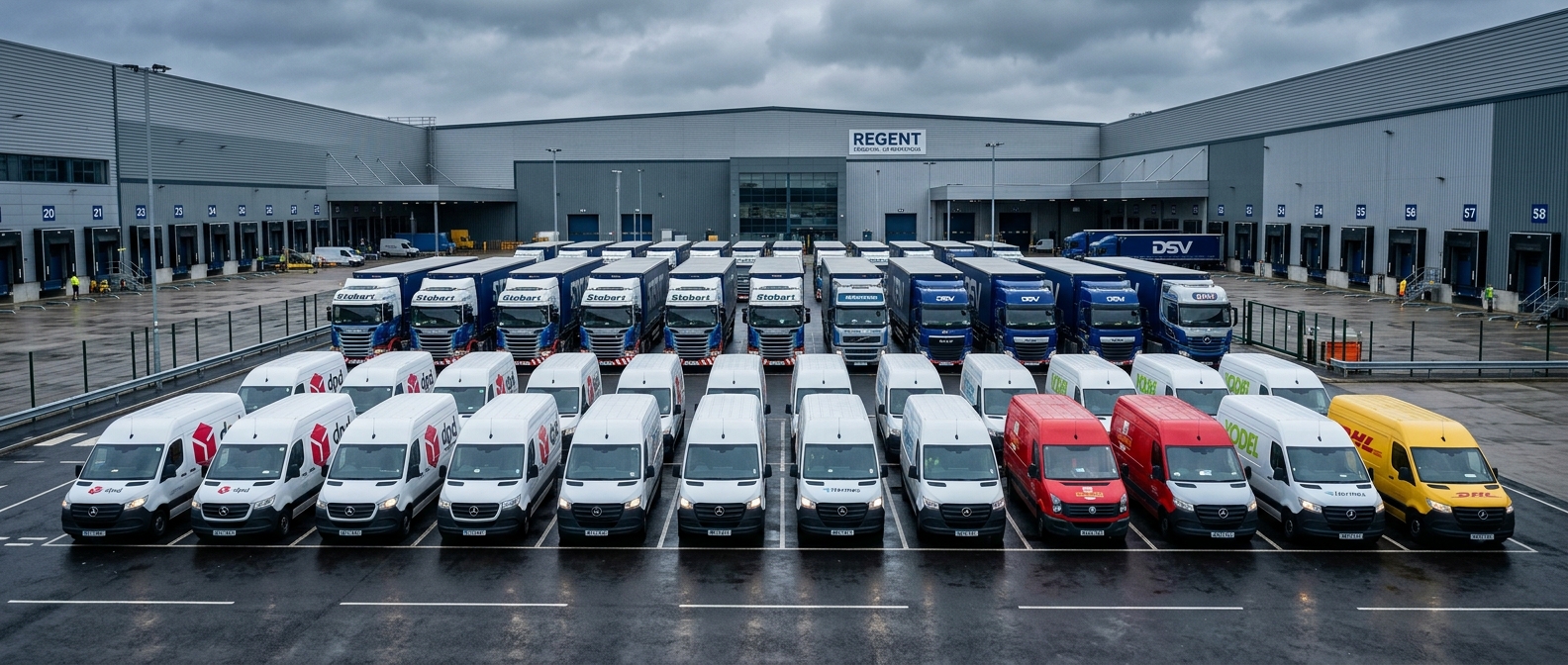
Commercial Vehicle Finance for UK SMEs
Funding vans, trucks, tippers, tractor units and specialist bodies? This guide is for you.
A commercial vehicle is usually the single largest thing an operating business buys, and it rarely arrives at a convenient moment. A contract win needs two more vans in three weeks. An eleven-year-old tipper finally fails its MOT and the bill is in the thousands. A tractor unit comes up at the right price and the seller wants a decision by Friday. Paying cash for any of that ties up money you need for fuel, wages, insurance and day to day cashflow.
Commercial vehicle finance spreads the vehicle cost across the years the vehicle is actually earning.
SMEmoney.co.uk is an introducer for businesses. We are not a lender, we are not a broker. We introduce your enquiry to our funding partners, who check a wide range of asset finance lenders and vehicle funders, from clearing banks through to specialist commercial vehicle and haulage funders who understand the assets properly. We serve businesses only. Limited companies and LLPs borrowing for business purposes are welcome at any amount, and sole traders and small partnerships are welcome where the borrowing is £25,000 or more and wholly or predominantly for business purposes.
What we are trying to do on this page is get you in front of funders who will look at your vehicle and your accounts on their merits, rather than leaving you with whatever your own bank happens to offer.
Why Use Commercial Vehicle Funding?
A commercial vehicle generates revenue from the day it goes on the road, so funding it over three to five years matches the cost to the income rather than front-loading it all from your bank balance.
Working capital stays where it is needed: the deposit is a fraction of the purchase price, usually just the VAT, so the rest of your cash stays available for the day to day.
The asset supports the lending: because the vehicle itself is security, asset finance is often available to businesses that would struggle to get an unsecured loan of the same size.
Predictable monthly cost: most agreements are on a fixed rate over a fixed term, so you can price a contract or a haulage rate knowing exactly what the vehicle costs you each month.
Whole fleet, not just new stock: funders will typically look at used vehicles from dealers or private sale, at bodywork and conversions, and at refinancing vehicles you already own outright to release cash.
Your vehicles deliver sales: More vehicles or capacity increases your ability to grow your turnover snd service more clients.
Pros and Cons of Commercial Vehicle Finance
Pros | Cons |
|---|---|
Speed: asset finance is one of the faster forms of business funding because the lender is looking at a well understood, easily valued asset. Straightforward limited company cases with filed accounts can often see a credit decision within one working day, and payout in under a week once the invoice and documents are in. That matters when a vehicle is only available for a few days. | Speed: the vehicle itself can slow everything down even when the credit decision is quick. Funders usually need a proper invoice from the seller, a HPI check, and confirmation of who holds the V5C. Imports, unusual bodies and vehicles over eight to ten years old all add days, and some funders will not touch them at all. |
Upfront Cost: deposits on commercial vehicles commonly sit around 10% plus the VAT, which is far less of your own money than buying outright. On hire purchase the VAT on the vehicle is normally payable at the start, but a VAT registered business can usually reclaim it in the next return, so the real cash outlay is often only the deposit. Some established businesses with strong figures are offered minimal deposit terms. | Upfront Cost: even at 10% plus VAT, a £70,000 tractor unit still needs roughly £7,000 plus £14,000 of VAT out of the door on day one, and the VAT is only reclaimed later. Newer businesses, or those with a thinner balance sheet, are frequently asked for 20% or more, and sometimes for a personal guarantee from a director. Documentation and option to purchase fees are usually charged on top. |
Ownership and Flexibility: on hire purchase you own the vehicle at the end of the agreement, which suits operators who run vehicles well past the finance term and want an asset with residual value on the balance sheet. On finance lease you get use of the vehicle without buying it, and end of term options usually include continuing at a low secondary rental or selling the vehicle to a third party and taking a share of the proceeds. Either route lets you decide as the term ends rather than at the start. | Ownership and Flexibility: you do not own the vehicle on either structure until the agreement is settled, and on finance lease you never take title at all, which does not suit a business that wants the vehicle outright. Agreements are hard to exit early, and settling ahead of term rarely saves you as much as you would expect. You also carry the maintenance, tyres, insurance and downtime for the whole term, and a vehicle sitting off the road still attracts payments. |
Cost of Funds: rates are usually fixed for the term, so the cost is predictable and you can build it into your day rate or contract pricing. Because the vehicle is security, pricing is often better than an unsecured loan of the same size, and stronger businesses funding larger balances see meaningfully lower rates than the market average. Going through a broad panel rather than one bank means you see more than one set of terms for the same request. | Cost of Funds: the total cost over three to five years is clearly more than paying cash, and rates vary widely by trade, vehicle age, term and how long you have been trading. Quoted flat rates are not APRs, and the equivalent APR is considerably higher than the flat figure suggests, so always compare on total payable. Documentation fees, option to purchase fees and any broker fee sit on top, and neither we nor our partner can promise you the cheapest outcome available in the market. |
Acceptance Likelihood: approval rates for commercial vehicle finance are generally healthier than for unsecured lending, because a funder that can recover and resell a van or truck has a clear route out. A specialist panel matters here, since a funder used to haulage and plant will read a set of accounts very differently from a high street bank. Adverse credit, short trading history and a first vehicle are all fundable in the right hands, though usually on tighter terms. | Acceptance Likelihood: nothing is guaranteed, and a proportion of enquiries do not get funded at the amount or price hoped for. Our scope is a hard limit rather than a preference: we serve businesses only, and we cannot help sole traders or small partnerships borrowing under £25,000, or anyone funding a vehicle for personal or household use. Newer businesses, recent CCJs, unfiled accounts and older or unusual vehicles all narrow the field of willing funders. |
Choosing the Right Structure
Asset finance/hire purchase is the umbrella term, and for commercial vehicles it usually comes down to two structures plus one option for vehicles you already own. Hire purchase is for businesses that want to end up owning the vehicle. Finance lease is for businesses that want the use of the vehicle with lower upfront cash and a different VAT and accounting treatment. Refinance is for businesses sitting on paid-for vehicles that would rather have the cash working in the business.
Your Finance Options
Hire Purchase Hire purchase suits businesses who keep their vehicles for a long time. You pay a deposit, usually around 10% plus the VAT on the vehicle, then fixed monthly payments over two to five years, and a small option to purchase fee at the end transfers ownership to you. The vehicle goes on your balance sheet from the start and you can normally claim capital allowances on it, with the interest element treated as a business expense. Day to day it behaves like a vehicle you own, because you tax it, insure it, maintain it and run it as you see fit, and the funder simply holds an interest until the agreement is settled. The trade-off is a higher initial cash requirement than a lease, and the fact that residual value risk is yours: if the vehicle is worth less than you expected in four years, that is your problem rather than the funder's.
Finance Lease Finance lease gives you full use of the vehicle without ever taking ownership. You pay an initial rental, often three to six months of payments rather than a percentage deposit, then fixed rentals across the term, and the VAT is charged on each rental instead of all on the purchase price at the outset, which is easier on cash flow. At the end you generally have a choice of continuing to use the vehicle on a low secondary rental, or arranging a sale to a third party and receiving an agreed share of the sale proceeds. Rentals are usually treated as an operating cost in your accounts, which some businesses prefer to holding the asset. It suits operators who replace vehicles on a cycle rather than running them into the ground, and businesses that want their VAT spread rather than reclaimed in a lump. The obvious limitation is that the vehicle is never yours, so if you would otherwise keep it for ten years, hire purchase probably makes more sense.
Refinancing Vehicles You Already Own If you own vehicles outright, a funder can advance cash against them and take security over the asset, with you repaying over a set term. This is often used to fund a deposit on a bigger purchase, cover a VAT or corporation tax bill, or bridge a gap while a large customer invoice is outstanding. Advances are based on the funder's own view of current trade value rather than what you paid, so expect a conservative figure, and the vehicle needs to be genuinely unencumbered. It is a useful option for asset rich, cash tight operators, though it does mean putting a charge back on something you had already cleared.
What Rates Actually Look Like
Pricing on commercial vehicle finance is driven by how long you have been trading, the size of the balance, the age and type of vehicle, and your trade. As a general guide, established businesses with several years of filed accounts funding larger balances are often quoted from around 4% to 5% flat, a typical trading SME more commonly sits nearer 7% to 8% flat, and newer businesses or those with a limited track record should expect 10% flat and upwards. These are indicative flat rates, so judge any offer on the total amount payable over the term rather than on the headline percentage. Rates move with the market and with your own profile, and the only figures that mean anything are the ones a funder puts in writing for your specific case.
On tax, hire purchase and finance lease are treated differently for capital allowances, VAT and profit and loss purposes. The best structure for you depends on your unique business, so please speak to a qualified accountant before deciding on that basis.
The SMEmoney Process
Start the enquiry: request a quote or apply through SMEmoney, giving the detail you have to hand.
Details passed on: your information is passed securely to our funding partner.
A specialist call: a funding specialist calls you to talk the options through properly.
Your decision: you decide whether to proceed, and your chosen application goes to the lender.
Payout: full acceptance, documents, then payout direct to the vehicle seller.
Frequently Asked Questions
What exactly is SMEmoney? We are an introducer for businesses. We are not a lender, not a broker, and not FCA authorised, and we introduce your enquiry to our funding partner platform, which reaches a wide panel of asset finance and commercial vehicle funders. Using our calculators and our introduction service is free to your business, because we are paid by our funding partner rather than by you.
Who can you actually help? Limited companies and LLPs borrowing for business purposes, at any amount. Sole traders and small partnerships where the borrowing is £25,000 or more and wholly or predominantly for business purposes. We cannot help with anything for personal, household or consumer use, and we cannot help sole traders or small partnerships borrowing under £25,000.
How much can I borrow? That depends on the vehicle and on your financials rather than on a fixed cap. Single van deals through to multi vehicle fleet purchases and tractor units in the hundreds of thousands are all funded in this market. Funders generally want the payment to look sustainable against your turnover and existing commitments.
How quickly can it be arranged? Straightforward limited company cases with filed accounts often get a credit decision within one to three working days. Payout typically follows within a few days of that, once the invoice, HPI check and documents are complete. Older vehicles, private sales and specialist bodies take longer, and nothing here is a promise about your particular case.
Can I finance a used commercial vehicle? Usually yes, and that is what the bulk of our clients do. Used vans, trucks, trailers and plant are funded routinely, and many funders will consider vehicles up to around eight to ten years old at the start of the agreement, with the term ending before the vehicle gets much beyond twelve. Older units are still fundable but with fewer willing funders and firmer terms.
Do I need a deposit? Commonly around 10% plus the VAT on hire purchase, or an initial rental of a few months on a finance lease. Established businesses with strong figures are sometimes offered nil or minimal deposit. Newer businesses are often asked for 20% or more.
What about the VAT? On hire purchase the VAT on the vehicle is normally payable up front and a VAT registered business can usually reclaim it in the next return. On finance lease the VAT is charged on each rental instead, spreading it across the term. Your own VAT position is a matter for your accountant.
Will a personal guarantee be required? Often, particularly for younger limited companies, smaller balance sheets or where the credit profile is mixed. Some funders will lend to established companies without one. It is one of the points a funding specialist will go through with you before you commit.
Can I get finance with adverse credit or a short trading history? It is frequently possible, because the vehicle itself provides security, and a specialist panel is more useful here than a single bank. Expect a larger deposit, a higher rate and a shorter term. It is not guaranteed, and some cases will not be fundable at all.
Are the rates you quote APRs? No. The figures on this page are indicative flat rates, which is how commercial vehicle finance is normally priced, and the equivalent APR is higher. Compare offers on the total amount payable over the term.
Does it cost me anything to enquire? No. Our calculators and our introduction are free to your business. Any fees charged by a lender or by our funding partner will be set out to you before you sign anything, and you are free to walk away at any point.
Which structure should I choose, hire purchase or finance lease? We do not advise, so we cannot tell you which to take. Broadly, hire purchase suits businesses that intend to own and keep the vehicle, and finance lease suits businesses that want use of the vehicle with the VAT spread across the rentals. The accounting and tax consequences differ, so discuss it with your finance professional and with the funding specialist before you decide.