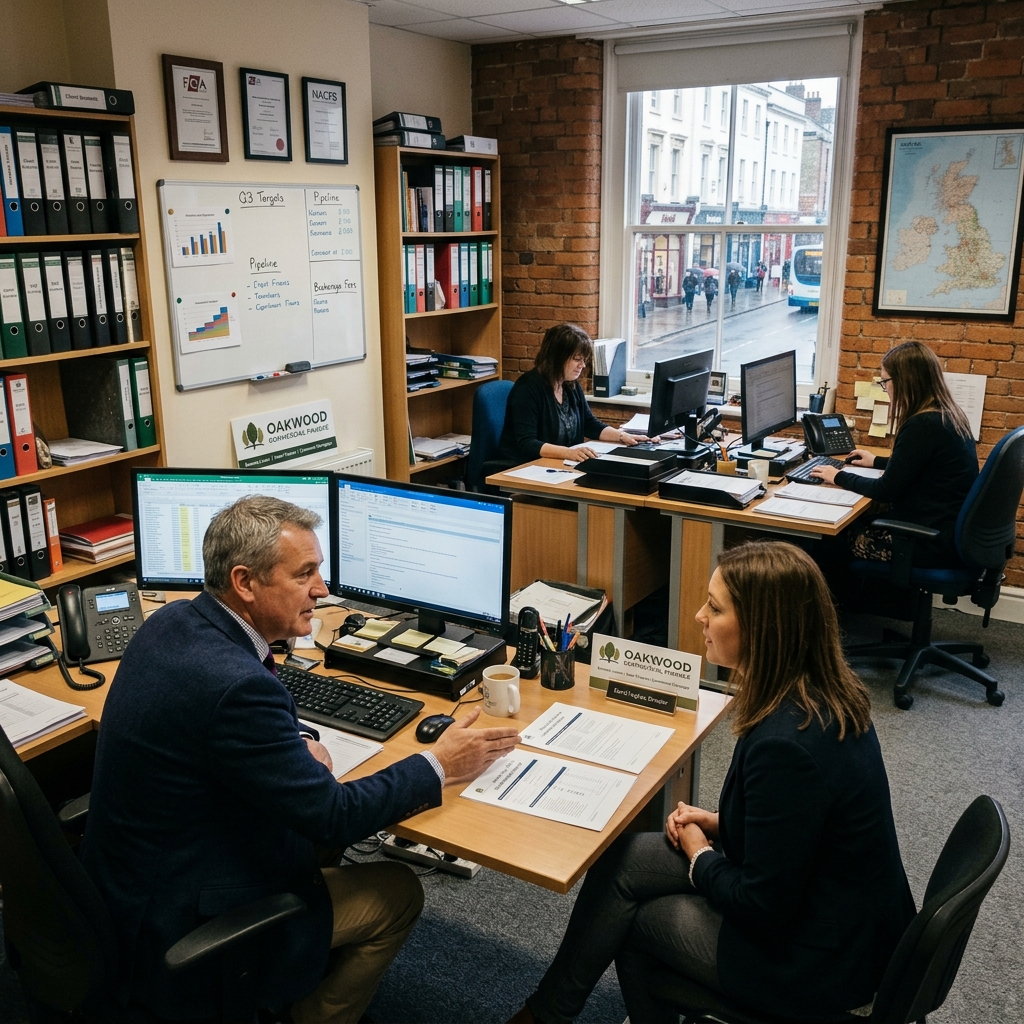
Finding capital to grow a business, manage cash flow, or buy equipment can be tough. When you go directly to a high street bank, you only see their specific products and credit rules. If they say no, you are back at square one. This is why many UK business owners work with business finance brokers. A commercial finance broker acts as an intermediary between your business and prospective lenders, searching the market to find a suitable loan or facility for your specific needs.
What Does a Business Finance Broker Do?
A business finance broker helps companies secure commercial funding. Rather than offering their own money, they source funds from a panel of independent lenders, alternative finance providers, challenger banks, and private funds.
A good broker manages the application process from end to end. They assess your financial accounts, understand your capital requirements, prepare your application, and submit it to the lenders most likely to approve it. This saves you from filling out lots of separate application forms and protects your credit footprint from unnecessary hard credit searches.
Direct Lenders vs Commercial Brokers
Direct lenders only promote their own financial products. If your trading history, asset base, or credit profile falls slightly outside their rigid limits, your application will be rejected.
In contrast, a commercial broker looks across the market. They know which lenders are actively funding specific industries, which providers accept lower credit scores, and which institutions offer the lowest interest rates for strong balance sheets.
Our role is to provide the technology and the leads to support our broker partners in providing the right finance products for your business. Think APR tools or business finance calculators
Types of Business Funding Brokers Do
Commercial finance brokers deal with a variety of credit products, including:
Unsecured Business Loans: Short to medium-term cash loans without requiring physical assets as security.
Secured Loans: Funding backed by property, land, or high-value business assets.
Asset Finance: Leasing or hire purchase arrangements to buy machinery, vehicles, or hardware.
Invoice Finance: Factoring or invoice discounting facilities that release cash tied up in unpaid customer invoices.
Commercial Mortgages: Long-term loans used to buy or refinance commercial property.
Merchant Cash Advances: Short-term funding repaid as a set percentage of daily card sales.
Direct Bank vs Commercial Broker
Compare the standard bank route against working with an independent finance broker.
Feature | Direct High Street Bank | Commercial Finance Broker |
|---|---|---|
Product Choice | In-house products only | Access to multiple alternative lenders and banks. Multiple lenders can keep rates competitive. A good broker can match you to the correct lender. |
Lending Criteria | Strict, standardised credit scoring, but knows your business | Flexible; matched to lenders with tailored appetites. Needs information to understand your business. |
Application Time | Can take weeks due to admin backlogs and legacy processes. "Neo-banks" may be quicker, or may not offer funding at all. | Often faster, with direct access to underwriters. A bigger panel may have some quicker lenders. It may tAke more time to compare the whole market, so the broker might compare a few lenders instead. |
Cost Structure | Standard arrangement fees and APR structure charged by the bank. | Lender commission, client broker fees, or a mix of both can affect the rate you pay. |
Support Level | Often automated and impersonal as many banks have fewer relationship managers for SMEs. | Personal support focused on securing debt funding, you can speak to a person. |
Benefits and Trade-offs of Using a Finance Broker
Using a broker offers real practical advantages, but there are trade-offs to keep in mind before signing an agreement.
The Advantages
The main benefit is choice. The UK alternative finance market has grown rapidly, making it almost impossible for a busy director to keep track of every lender's rates and terms. Brokers know which lenders are active and where your business fits best.
Brokers also know how to present financial information. They present your profit and loss statements, balance sheets, and cash flow forecasts in a format underwriters prefer. This presentation can mean the difference between an approval and a declination.
The Trade-offs and Risks
Working with a broker is not free. Many brokers earn their income solely via commission paid by the lender, some charge upfront fees or management fees directly to the client. Always ask about the fee structure before signing your documents.
Additionally, not all brokers have equal market access. A broker with a small panel of five or six lenders cannot offer the same reach as one with access to over 70 lenders. Some brokers are tied to specific panel arrangements, which can limit your access to the broader market.
Interest rates, credit risk assessment, and eligibility vary based on your company trading duration, annual turnover, profitability, and credit history.
We always advise speaking with a qualified accountant regarding tax deductions and accounting treatment before entering into a credit agreement.
How Broker Commissions Work
Understanding how a commercial finance broker makes money is important for transparency. Generally, broker remuneration falls into three main models:
Lender Commission (Procurement Fees): The lender pays the broker a percentage of the loan value as a referral fee upon successful drawdown. This is the most common model for standard business loans and asset finance.
Client Success Fees: The broker charges you a set percentage of the total capital raised once the funds reach your bank account.
Upfront Commitment Fees: Some brokers charge an upfront administrative fee to cover initial packager work. Be cautious with upfront fees, and ensure you understand if they are refundable if funding cannot be secured.
Under regulations and industry best practices, brokers should clearly disclose their fee structure and any potential conflicts of interest before you agree to move forward.
How to Choose a Commercial Broker
Not all brokers offer the same quality of service. Use this simple checklist to evaluate a broker before handing over your financial records.
Criteria | What to Look For | Orange Flags |
|---|---|---|
Industry Accreditations | Member of the NACFB (National Association of Commercial Finance Brokers) or FCA registered where applicable. | No industry affiliations or clear regulatory disclosures on their website. Business finance brokers do not have to be authorised. |
Lender Panel Size | A broad panel spanning dozens of direct lenders, challenger banks, and specialist funds. | A restricted panel of a few lenders could mean higher rates out less chance of acceptance |
Fee Transparency | Clear explanation of broker fees and lender commissions before signing. | Demands for high, non-refundable upfront fees before reviewing your file. |
Sector Expertise | Proven track record funding businesses in your specific sector (e.g., construction, retail, haulage). | Lack of knowledge regarding your industry's specific cash flow cycles. |
Finding the Right Business Funding
Using an independent commercial finance broker can save you time, protect your credit profile, and give you access to flexible funding options outside high street banks. By comparing multiple lenders, you increase your chances of securing competitive rates and terms matched to your operational needs.
SME Money connects UK businesses with specialist brokers who search over 70 lenders to find the right funding for your firm - without the bias of a single bank. If you are looking to secure business credit, compare your business finance options today to find funding that fits your strategic goals.